Introduction
Anatomy
Cause
Symptoms
Diagnosis
Non-surgical treatment
Surgical treatment
Rehabilitation
Prevention
Introduction
Fractures of the clavicle are common among children and athletes.
Anatomy
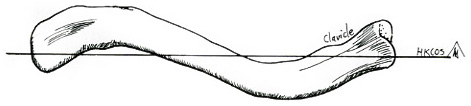
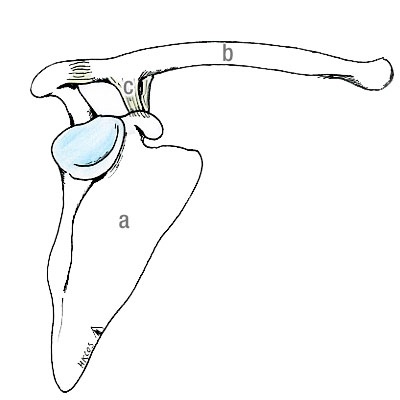
The clavicle, or what is commonly known as the collarbone, is a long and mildly S-curved subcutaneous bone in the shoulder region. It connects the acromion, part of the scapula, through the acromioclavicular joint, to the sternum at the front part of the rib cage, through the sternoclavicular joint. This helps to connect the arm to the body. There are important nerves and blood vessels beneath the clavicle.
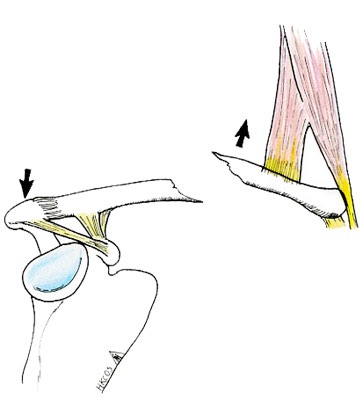
Occasionally, these vital structures may be injured when the clavicle fractures, causing significant medical problems. Most of the clavicular fractures occur in the middle section. To a lesser extent, some occur in the distal section. Rarely do such fractures occur at the medial section.
Cause
Fractures of clavicle are common among children and athletes. Occasionally, neonatal clavicular fractures can happen when babies are born through vaginal delivery, during their passage down the birth canal.
Most of the patients with clavicular fractures have sustained a fall and landed on their shoulder region. The force can be transmitted from the shoulder to the clavicle, causing it to break.
Symptoms
Most of the patients with newly sustained clavicular fractures complain of severe pain when attempting to raise the arm.
Symptoms of clavicular fractures may include:
sagging of the shoulder;
a "bump" over the fracture site;
bruise and swelling over the fracture site;
abrasion marks over the acromion region;
occasional skin tethering;
pain when lifting the arm.
Diagnosis
There is usually an obvious "bump" and a sensation of severe tenderness at the fracture site. Sometimes, a grinding feeling can be felt when the patient tries to raise the arm. Upon taking history and confirming the presence of the “bump”, an orthopaedic surgeon can proceed to make a clinical diagnosis.
The surgeon will carefully examine the upper limb to make sure that there is no associated major nerve or blood vessel damage. Radiological examination with plain X-rays is often performed to confirm the diagnosis and assess the degree of fracture displacement. In patients with major traumas, it is important to assess any associated fractures around the shoulder girdle region, including the scapular neck or the ribs.
Non-surgical treatment
Most simple clavicular fractures – those without any associated fractures – will heal well upon conservative treatment, such as:
a simple arm sling
a clavicular brace in the shape of the figure 8
Depending on individual situations, your orthopaedic surgeon will offer suggestions for an appropriate treatment plan. In the initial stage, analgesics, such as acetaminophen or Non-Steroidal Anti-Inflammatory Drugs (NSAID), can help reduce pain associated with these fractures.
The obvious bump noticed at the time of the injury will decrease over time. A small bump may remain, but it does not cause any pain, hamper any functions of the shoulder girdle nor does it restrict its full range of motion. Usually, these fractures take several months to heal. After the bone has healed and consolidated properly, the shoulder joint’s functions generally return.
In some rare cases, especially distal clavicular fractures, the bone fails to heal (non-union), thus requiring subsequent surgical intervention.
Surgical treatment
Surgery is rarely prescribed for this type of injury.
Rehabilitation
Rehabilitation is an essential part of the whole treatment process. Usually, the physical therapy programme begins with gentle and passive movements and, at the appropriate time, advances to active and resistive exercises.
The programme is individualised by your orthopaedic surgeon, physiotherapist and occupational therapist based on your conditions. Complete recovery usually takes several months. Your surgeon will assess the final outcome to provide advice on when it is safe to return to manual work and sports activity.
Prevention
There are no specific prevention measures available.
Dr. YU, Kong-san