Introduction
Anatomy
Cause
Symptoms
Diagnosis
Non-surgical treatment
Surgical treatment
Rehabilitation
Prevention
Introduction
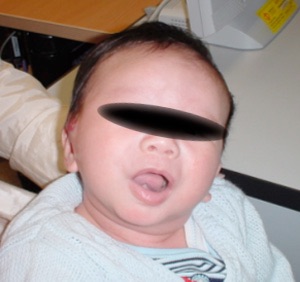
Congenital torticollis is usually found in infants. An infant with congenital torticollis has his or her chin upward and pointed toward one side, and has difficulty turning the head to the opposite side.
Anatomy
The movement of the neck and the head depends on the neck muscles on either side of the neck. If there is spasm or shortening of muscles on one side of the neck, the neck will be tilted to that side and the chin pointed to the opposite shoulder. One side of the neck muscle may be swollen noticeably. Occasionally, the neck bones might be crooked.
Cause
The cause is unknown. Some of the infants who have this condition have been born in a difficult delivery. The sternocleidomastoid muscle – one of the two thick muscles of the neck – may have experienced a shortage of blood supply while the fetus is forced into a distorted position during pregnancy, or it may have been injured at birth. The muscle on one side becomes fibrotic and fails to elongate as the child grows.
Symptoms
The face and the head might appear to be asymmetrical. There is a hard lump on one side of the neck, which will be swollen within two months of birth. However, within a year, this lump would gradually disappear; if not, the muscles will become fibrosis and the head will become permanently tilted.
Diagnosis
An orthopaedic specialist will first examine the infant to determine whether the torticollis originates from the cervical spine or the neck muscles. An X-ray can help determine if the spine shows any deformity.
Non-surgical treatment
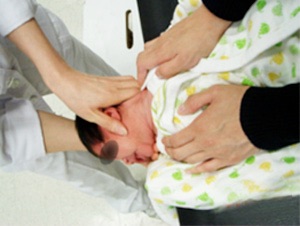
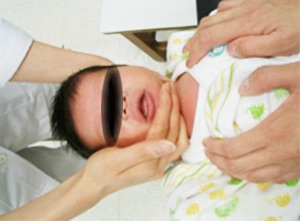
Treatment for infants usually involves non-surgical, corrective manual therapies by physiotherapists, the results of which are generally effective. Only a minority of patients require surgery.
Treatment for the type of torticollis that originates from the cervical spine is more complicated, as the condition is often related to other congenital diseases that need to be treated simultaneously.
Surgical treatment
If the deformity persists after a period of non-surgical treatment, surgery may be needed to correct the torticollis. The contracted muscles can be released or lengthened and the head is manipulated into the neutral position.
Rehabilitation
After surgery, a temporary rigid orthosis is prescribed for the infant to wear around the neck for six to 12 months. When the child no longer needs to wear the orthosis, stretching exercises performed by a physiotherapist or the parents will be prescribed.
Prevention
Because this is a congenital condition, it cannot be prevented.
Dr. NGAI, Wai-kit